

Preserving America’s Story: Why Historic Buildings Matter More Than Ever in Our 250th Year.
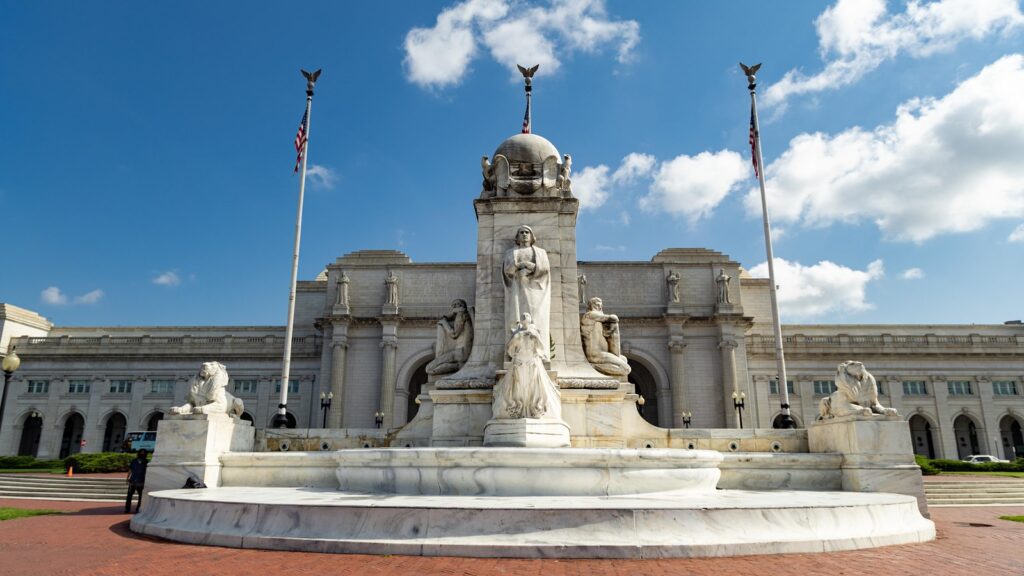
Federal
July 02, 2026
As the Fourth of July approaches, Americans everywhere prepare to celebrate independence with fireworks filling the sky, flags waving proudly, and communities coming together in celebration. But this year carries deeper meaning. As the nation marks its 250th anniversary, it invites us to reflect not only on our history, but on how we preserve it.
America’s history isn’t just written in books or taught in classrooms. It’s built into landmarks, parks, and public spaces that we use every day.
That is why restoration work matters, not only as a technical effort, but as a way of keeping public memory visible and accessible.
Our History Lives in Our Public Spaces
From iconic monuments in the nation’s capital to local parks and gathering places, our built environment tells the story of who we are. These spaces welcome millions of visitors each year, serve as backdrops for our everyday lives, and share our history with future generations!
When we invest in preserving them, we ensure that those stories continue to be seen, experienced, and understood.
Restoring Landmarks for a New Generation
In honor of America’s 250th anniversary, RRMM Architects wants to present our projects, like the restoration of the Columbus Fountain at Union Station and the Meridian Hill Park Cascades in Washington, D.C. demonstrate the power of preservation in action.
The Meridian Hill Park Cascades
Located in Meridian Hill Park, also known as Malcolm X Park, this fountain is one of the most remarkable water features in North America.
Stretching across thirteen semi-circular basins, the cascading system carries water from terrace to terrace through a series of spouts, niches, and pools, creating a visually striking and immersive experience. Completed in 1936 by artist John Joseph Earley, it remains the largest of its kind in the United States and is recognized by the National Park Service as one of the longest cascading fountains in North America.
However, like many historic structures, time and aging infrastructure took their toll. The cascades had been nonfunctional since 2019 due to plumbing failures and deterioration.
As part of a major restoration effort completed in 2026, the system was repaired and brought back to life, restoring not just a fountain, but a vital community landmark. Commissioned by the National Park Service, RRMM Architects, alongside Terra Constructs, GPD, and IMEG, were able to restore this iconic water feature. Today, the cascades once again serve as a centerpiece for the park, reconnecting visitors to the original vision of the space while ensuring its sustainability for years to come.
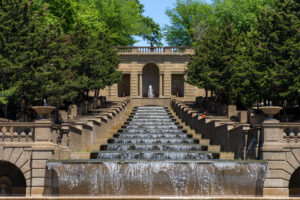
(Image credit: DOI / Kelsey Graczyk)
The Columbus Fountain
Standing in front of Washington’s Union Station, the Columbus Fountain has served as a ceremonial gateway to the nation’s capital for over a century.
Designed by renowned architect Daniel Burnham and sculpted by Lorado Taft, the monument was dedicated in 1912 as part of the 400th anniversary of Columbus’s voyage. Its placement at Union Station was intentional, welcoming visitors with a grand statement about exploration, progress, and the expanding identity of the United States.
The fountain’s design is rich with symbolism. The central granite pylon topped with a globe to represent global reach. Meanwhile, the figure of Columbus looks forward with resolve, symbolizing . Next to Columbus sit two allegorical figures. The first figure depicts the Old World and ancient civilization, while the second figure represents the New World. The New World depiction portrays a young Native American. This was intended to symbolize the Native Americans experiencing the European exploration. Furthermore, the Old World depiction portrays an older European. It was intended to highlight the ancient European civilizations, closely imitating the Romans or Greeks. As Christopher Columbus is the center of these two worlds colliding, he remains in the focus of the fountain.
Over time, exposure to the elements and aging materials required thoughtful intervention. Restoring this monument meant more than repairing stone and water systems, it required preserving a complex work of art, maintaining its historic character while ensuring its longevity in a modern urban environment. Commissioned by the National Park Service, RRMM Architects, alongside Terra Constructs, GPD, and IMEG, were able to restore this gateway to Union Station.
Today, the Columbus Fountain continues to welcome visitors to Washington, D.C., connecting past and present at one of the most significant entry points to the capital.
(Image credit: NPS / Kelsey Graczyk)
Looking Ahead by Preserving the Past
America’s 250th anniversary is a milestone moment! We are celebrating the long history of our nation, while also looking forward to what lies ahead!
When we restore these spaces, we’re not just repairing structures, we’re preserving the living history of America itself!